Two ways to move used vehicles
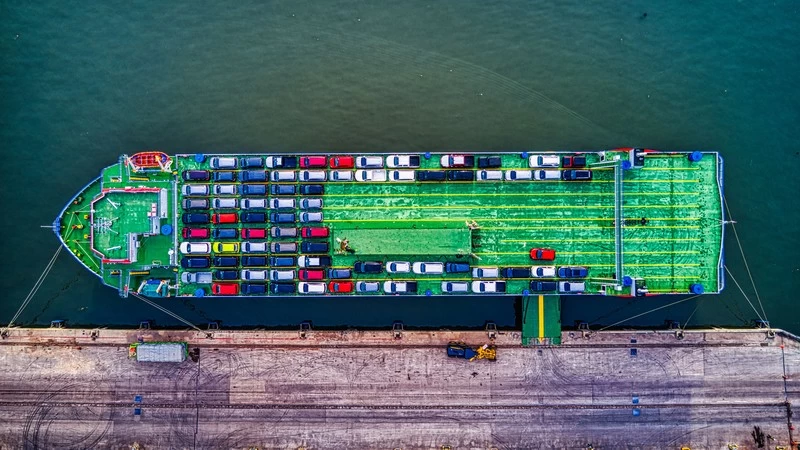
Roll-on roll-off (RoRo) means vehicles are driven onto a specialized ship and secured on decks. Container shipping loads vehicles into boxes that travel with general cargo.
Both reach US ports, but they differ in cost structure, handling, and how much you control the environment around the vehicle.

Cost drivers
| Factor | RoRo | Container |
|---|---|---|
| Per-unit rate | Often lower for single cars | Higher, but shares across units |
| Best volume | One to a few units | Mixed or bulk batches |
| Packaging | None | Optional wrap and desiccant |
| Transit options | Fixed sailings | More routing choices |
Damage and exposure risk
RoRo exposes vehicles to open-deck weather and salt spray on long ocean legs. Washing and underbody protection before sailing reduce corrosion risk.
Containers shield vehicles from weather and let you add straps, wrap, and moisture control. The trade-off is higher handling at both ends.
Choosing by shipment profile
- Single vehicle, standard condition: RoRo is usually simpler and cheaper.
- Mixed batch with different sizes: a shared container spreads cost.
- High-value or fragile units: container with extra protection.
- Tight inland routing: compare port options for each method.
Common shipping mistakes
- Skipping underbody cleaning before RoRo.
- Not confirming the destination port accepts the method.
- Underestimating inland trucking after discharge.
- Leaving loose items inside the vehicle.
Frequently asked questions
Is RoRo cheaper than container?
For one or two cars, usually yes. For a mixed bulk order, a shared container can be competitive.
Are containers safer?
They reduce weather exposure and let you add protection, but handling quality still matters.
Can I ship personal items in the car?
Carriers usually forbid loose cargo inside vehicles. Confirm the policy before loading.
Which US ports accept RoRo?
Several major ports do, but routes change. Confirm the sailing and port with the forwarder.
How long does transit take?
It depends on the lane and port calls. Ask for a window, not a fixed date.
Who arranges the booking?
Your freight forwarder or the supplier’s shipping partner. Align responsibility before the vessel closes.
Summary
RoRo fits single standard units; containers suit mixed or protected bulk loads. Match the method to unit count, value, and the weather exposure you can accept.
Plan your shipment
Tell us the vehicle types, quantities, packaging needs, destination port, and expected delivery window. We will compare RoRo and container options and outline the cost and transit. Open an inquiry here or see more logistics guides in NEWS.